Rent Now In Miami: (786)-999-8288
Rent Now In Detroit: (313) 447-1684
Rent Now In Miami: (786) 999-8288
Rent Now In Miami: (786)-999-8288
Rent Now In Detroit: (313) 447-1684
Rent Now In Miami: (786) 999-8288
Rent Now In Detroit: (313) 447-1684
Rent Now In Miami: (786) 999-8288

Few names in the automotive world carry the same mystique and reverence as Koenigsegg. Founded in 1994 by the visionary Christian von Koenigsegg in Sweden, Koenigsegg Automotive AB has spent three decades rewriting the rulebook on what a road car can be. What began as the dream of a teenager who wanted to build the world’s greatest supercar has evolved into one of the most celebrated and feared names in hypercar engineering.
Based in Ängelholm, Sweden — inside a former Swedish Air Force hangar — Koenigsegg operates with a philosophy that blends obsessive engineering precision with an almost artistic approach to design. Every car that leaves the facility is handcrafted, with hundreds of hours of skilled labor poured into each chassis, body panel, and drivetrain component. The result is not merely a vehicle, but a rolling testament to human ingenuity and the relentless pursuit of perfection.
What truly separates Koenigsegg from the competition is its commitment to in-house innovation. Rather than sourcing components from established suppliers, Koenigsegg develops groundbreaking technology from scratch. The brand pioneered the freevalve engine system, which eliminates the traditional camshaft to allow unprecedented control over valve timing and engine behavior. They developed their own carbon fiber manufacturing techniques, their own transmission systems, and even their own hybrid drivetrains — all within the same facility where the cars are assembled.
The result is a lineup of hypercars that not only dominates performance benchmarks but consistently sets new world records. Koenigsegg has held the production car land speed record multiple times, and its engineering innovations have influenced the broader automotive industry in ways that few boutique manufacturers can claim.
Owning a Koenigsegg is not simply a purchase — it is an initiation into one of the world’s most exclusive automotive clubs. These machines are not produced in the thousands or even the hundreds. Many Koenigsegg models are limited to fewer than 25 examples worldwide, and some exist in single-digit quantities. That scarcity, combined with bespoke craftsmanship and record-breaking performance, creates a level of desirability that few luxury brands can match.
Each Koenigsegg owner works directly with the factory team to personalize their vehicle. Paint colors, interior materials, carbon fiber weave patterns, wheel designs, and even powertrain configurations can be tailored to individual specifications. This means no two Koenigseggs are truly identical, making ownership feel deeply personal in a way that mass-produced luxury vehicles simply cannot replicate.
From a collector’s standpoint, Koenigsegg cars have also proven to be strong investments. Their rarity, provenance, and technological significance ensure that they hold — and often appreciate — in value over time. For driving enthusiasts and collectors alike, a Koenigsegg represents the pinnacle of what modern automotive manufacturing can achieve.
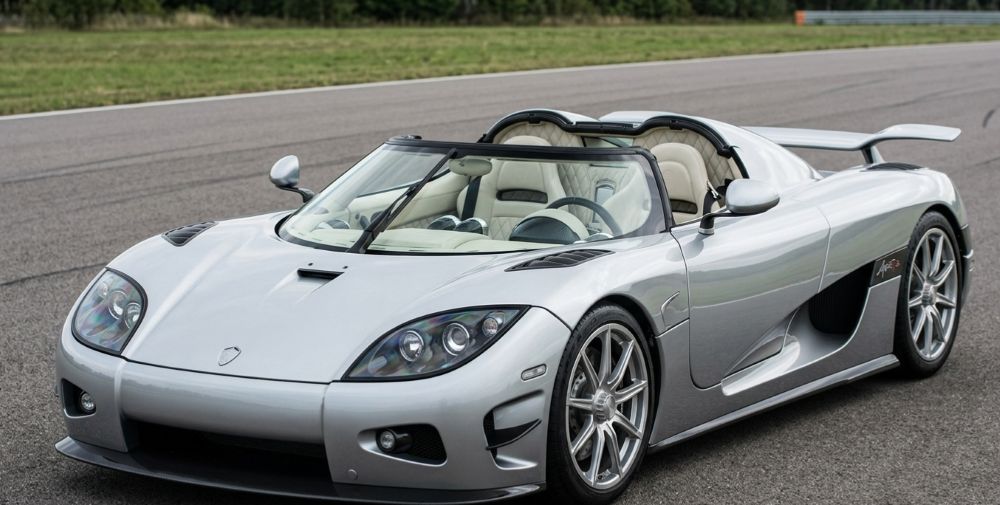
At the very pinnacle of Koenigsegg’s production history sits the CCXR Trevita, a car so rare and so breathtaking that it practically defies categorization. Priced at $4.8 million, the Trevita was originally planned as a three-unit limited run, though only two were ever completed — making it arguably the rarest road-legal hypercar ever produced.
The name “Trevita” translates to “three whites” in Swedish, a nod to the car’s most defining feature: its proprietary diamond-weave carbon fiber finish. Koenigsegg developed an entirely new process to coat the carbon fiber strands with a reflective diamond-dust material, creating a surface that shimmers brilliantly under sunlight. The effect is unlike any paint job or conventional finish — the body of the Trevita looks as though it has been sculpted from precious stone.
Beneath that extraordinary exterior lies a twin-supercharged 4.8-liter V8 engine producing 1,018 horsepower, paired with a six-speed paddle-shift gearbox. The Trevita launches from 0 to 60 mph in just 2.9 seconds and reaches a top speed exceeding 254 mph. Like all Koenigsegg cars of its era, it also benefits from carbon ceramic brakes, an active rear wing, and a lightweight carbon fiber monocoque chassis.
The CCXR Trevita is as close to automotive jewelry as anything on four wheels has ever come. Its combination of staggering rarity, visual magnificence, and world-class performance places it in a category entirely its own.
Feature | Details |
Engine | Twin-supercharged 4.8L V8 |
Horsepower | 1,018 hp |
0–60 mph | ~2.9 seconds |
Top Speed | 254 mph |
Units Produced | 2 |
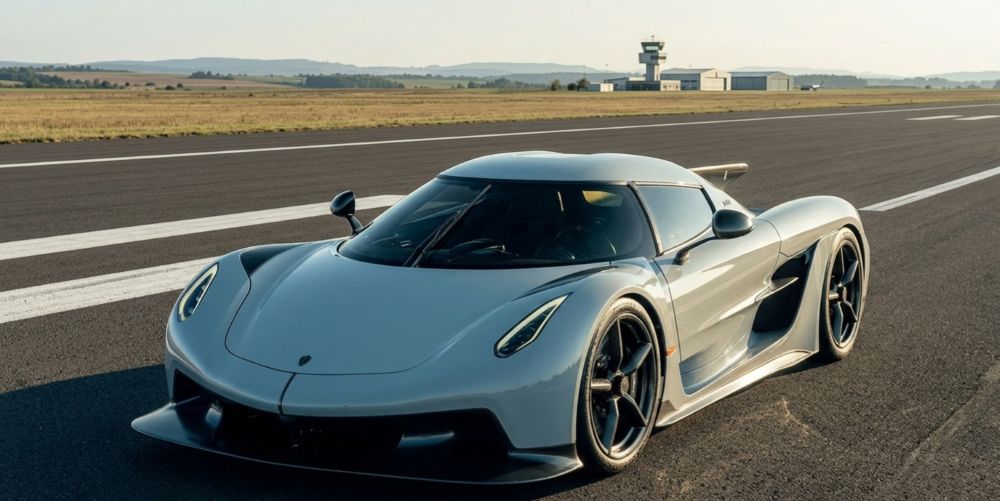
Named after Jesko von Koenigsegg, the father of founder Christian von Koenigsegg, the Jesko Absolut is both a tribute and a declaration of intent. Priced at $4 million, this machine was built with a single ambition: to be the fastest car Koenigsegg will ever produce.
The Absolut’s twin-turbocharged 5.0-liter V8 engine, running on E85 ethanol fuel, produces an astounding 1,600 horsepower. On standard 98-octane gasoline, output is “only” 1,280 horsepower. The engine is paired with Koenigsegg’s proprietary Light Speed Transmission (LST), a nine-speed multi-clutch gearbox that can execute gear changes in virtually zero time — making it arguably the fastest-shifting transmission ever fitted to a road car.
Aerodynamically, the Absolut was designed with an unwavering focus on low drag. Unlike its sibling, the Jesko Attack, the Absolut forgoes massive downforce elements in favor of a streamlined body optimized for straight-line speed. Theoretical calculations by Koenigsegg’s engineers suggest it is capable of exceeding 330 mph — a number that, if verified, would shatter all existing production car speed records.
Only 125 Jesko units were ever planned across both variants, all of which sold out almost immediately. The Absolut is not just a fast car — it is a philosophical statement about the limits of what engineering can achieve.
Feature | Details |
Engine | Twin-turbocharged 5.0L V8 |
Horsepower | 1,600 hp (E85) |
0–60 mph | ~2.5 seconds |
Top Speed | 300+ mph (theoretical) |
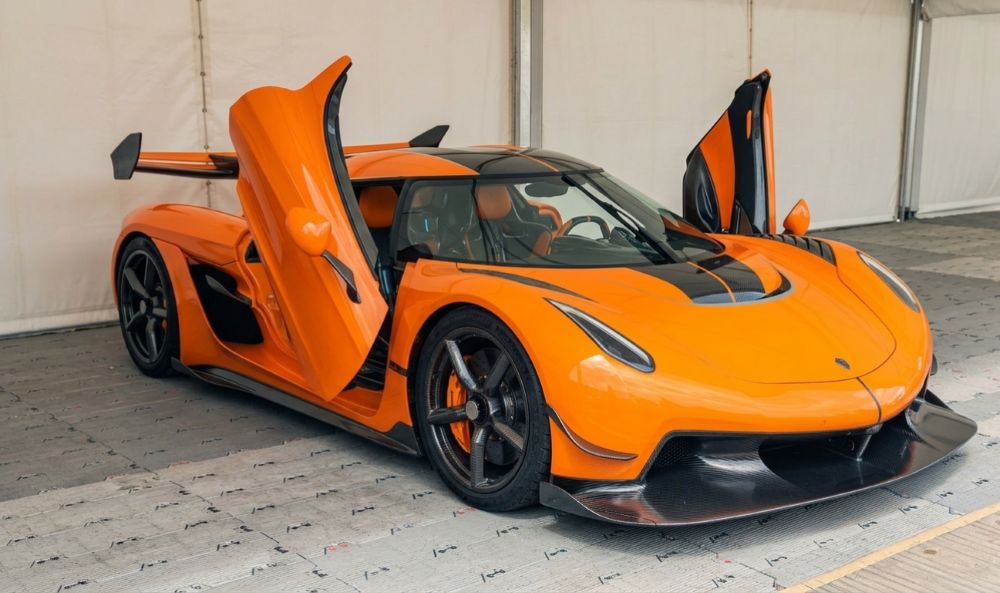
While the Absolut chases top speed records, the Jesko Attack was designed to dominate racetracks. Priced at $3.5 million, it shares the same monstrous 1,600-horsepower twin-turbocharged V8 and Light Speed Transmission as its sibling, but its aerodynamic package is a world apart.
The Attack features an aggressive, high-downforce body kit built around a massive rear wing and a complex front splitter system. At speed, it generates extraordinary downforce that pins the car to the road, allowing for cornering forces that rival purpose-built racing machines. Koenigsegg engineered the Attack to lap circuits faster than any of its previous models, blending raw power with surgical precision.
The carbon fiber monocoque chassis keeps the car’s weight to an absolute minimum, while the fully adjustable suspension allows the setup to be tailored to different circuit configurations. Like all Jeskos, it also features an active rear-wheel steering system that improves agility at low speeds and stability at high ones.
If the Absolut is Koenigsegg’s answer to the question of ultimate speed, the Attack is its answer to the question of ultimate lap times.
Feature | Details |
Engine | Twin-turbocharged 5.0L V8 |
Horsepower | 1,600 hp (E85) |
0–60 mph | ~2.6 seconds |
Top Speed | 275 mph |
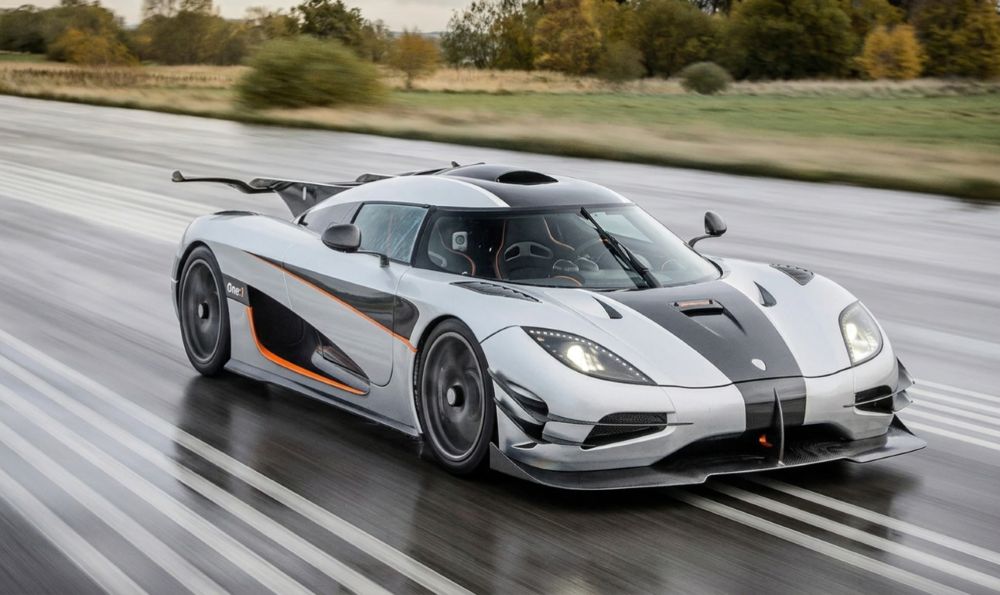
The Koenigsegg One:1 introduced a new word to the automotive lexicon: megacar. Unveiled in 2014 and priced at $2.85 million, the One:1 earned its name from its remarkable power-to-weight ratio — exactly one horsepower for every kilogram of car.
With a curb weight of 1,360 kilograms and a twin-turbocharged 5.0-liter V8 engine producing exactly 1,360 horsepower, the One:1 achieved a feat that engineers had long theorized about but never commercially realized. The car accelerates with almost supernatural urgency, reaching 60 mph in approximately 2.8 seconds and achieving a top speed of 273 mph.
Only seven examples were produced, with six going to customers and one retained by the factory as a development and demonstration vehicle. The One:1 also became famous for its cutting-edge active aerodynamics, including a large rear wing capable of generating significant downforce for track use and retracting for reduced drag on public roads.
The One:1 marked a turning point for Koenigsegg, signaling that the company was no longer merely building fast cars — it was redefining the category itself.
Feature | Details |
Engine | Twin-turbocharged 5.0L V8 |
Horsepower | 1,360 hp |
0–60 mph | ~2.8 seconds |
Top Speed | 273 mph |
Units Produced | 7 |
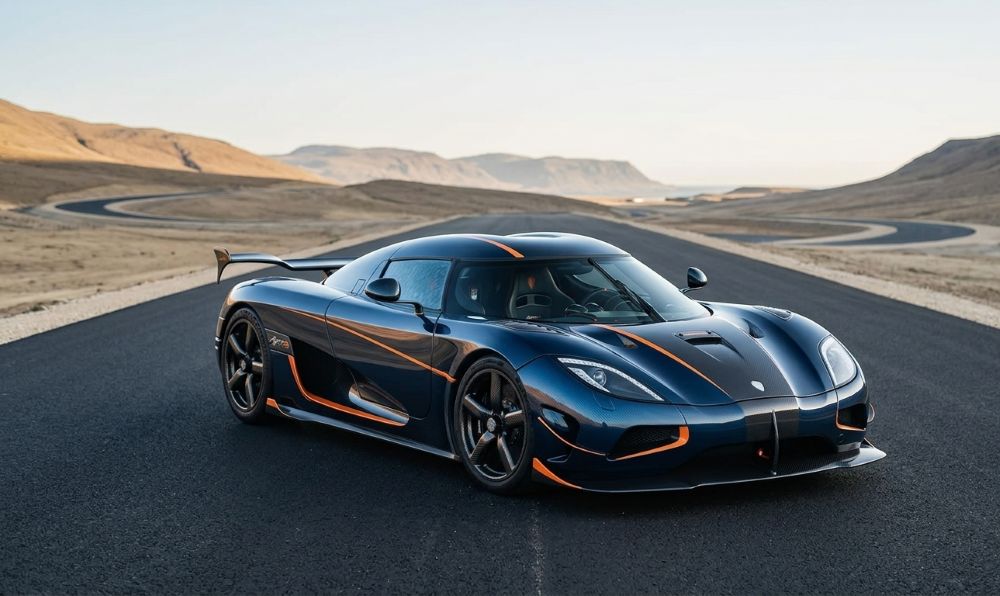
The Koenigsegg Agera RS is a car that needs no theoretical claims. In November 2017, on a closed stretch of Nevada highway, the Agera RS set the production car top speed record with a two-way average of 277.9 mph — officially making it the fastest production car in the world at the time.
Priced at $2.5 million and limited to just 25 units, the Agera RS is an evolution of the already exceptional Agera platform. Its twin-turbocharged 5.0-liter V8 produces 1,341 horsepower and 1,160 lb-ft of torque, channeled through a seven-speed paddle-shift transmission to the rear wheels. Despite those output numbers, the Agera RS is also remarkably refined on public roads, a testament to Koenigsegg’s obsessive attention to real-world drivability.
Each of the 25 examples was built entirely to customer specification, making every Agera RS a unique interpretation of the same extraordinary platform. The combination of verified real-world performance, extreme exclusivity, and bespoke craftsmanship makes the Agera RS one of the most significant hypercars of the modern era.
Feature | Details |
Engine | Twin-turbocharged 5.0L V8 |
Horsepower | 1,341 hp |
0–60 mph | ~2.9 seconds |
Top Speed | 277.9 mph (world record) |
Units Produced | 25 |
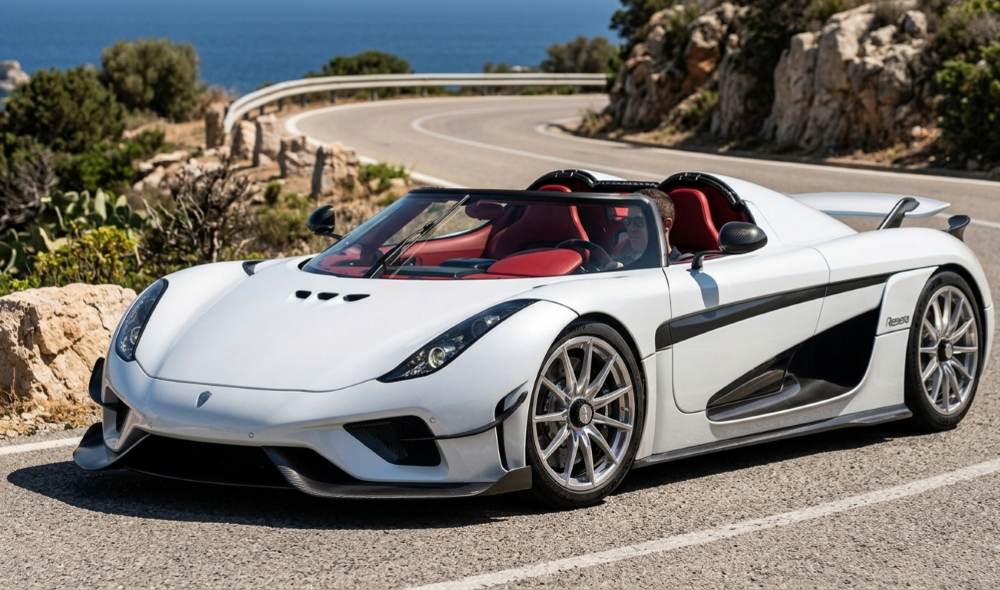
The Regera represents a different kind of ambition from Koenigsegg. Rather than chasing pure top-speed records, the Regera was conceived as the ultimate grand tourer — a machine of staggering performance wrapped in a more luxurious, road-focused package.
Priced at $2.1 million, the Regera features a hybrid powertrain that pairs a twin-turbocharged 5.0-liter V8 engine with three electric motors — two on the rear axle and one integrated into the drivetrain — for a combined system output of 1,500 horsepower. What makes the Regera truly revolutionary, however, is not the output figure but the architecture behind it.
Koenigsegg developed the Direct Drive system specifically for the Regera, eliminating the traditional multi-speed gearbox entirely. Instead, the electric motors handle low-speed power delivery and cover the gaps that a gearbox would normally manage, resulting in a seamless, wave-like surge of power from standstill to its 255 mph top speed. The transition from electric to combustion power is so smooth as to be imperceptible.
Limited to 80 units, the Regera was also one of the most visually striking Koenigseggs ever produced, with smooth, flowing bodylines that felt like a deliberate departure from the more angular aesthetic of its siblings.
Feature | Details |
Engine | Hybrid: Twin-turbo V8 + 3 Electric Motors |
Horsepower | 1,500 hp (combined) |
0–60 mph | ~2.8 seconds |
Top Speed | 255 mph |
Units Produced | 80 |

Perhaps no car in Koenigsegg’s history challenged expectations more thoroughly than the Gemera. Unveiled in 2020 and priced at $1.9 million, the Gemera defied the fundamental logic of the hypercar segment by offering four full seats and genuine everyday usability — without sacrificing a single horsepower of performance.
Koenigsegg calls it the world’s first four-seater megacar, and the designation is entirely justified. The Gemera’s hybrid powertrain pairs a 2.0-liter twin-turbocharged three-cylinder engine — affectionately named the “Tiny Friendly Giant” by the engineering team — with three electric motors, delivering a combined output of 1,700 horsepower and 2,581 lb-ft of torque. The result is a 0 to 62 mph time of just 1.9 seconds, making it one of the fastest-accelerating cars ever built.
Yet the Gemera is also practical in a way that no other hypercar attempts. It has rear seats that can accommodate adults comfortably, a 200-liter luggage space, wireless phone charging, cup holders, a panoramic glass roof, and even a heated windshield. It is Koenigsegg’s proof that performance and practicality are not mutually exclusive — they just require extraordinary engineering to coexist.
Feature | Details |
Engine | Twin-turbo Inline-3 + 3 Electric Motors |
Horsepower | 1,700 hp (combined) |
0–60 mph | ~1.9 seconds |
Top Speed | 248 mph |
Seats | 4 |
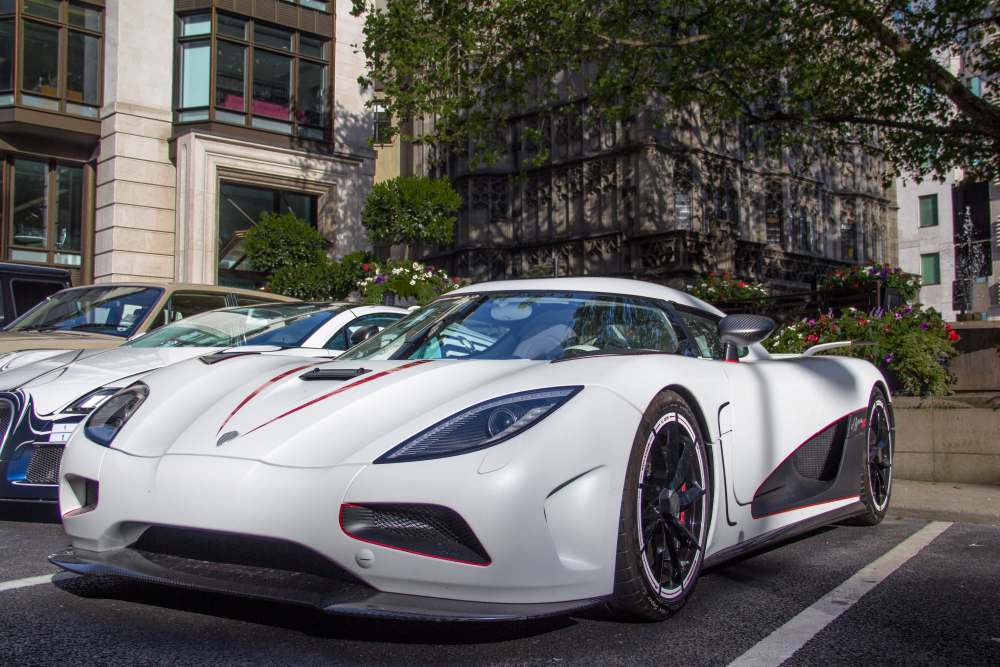
The Agera R was the car that marked Koenigsegg’s arrival on the world stage as a true top-tier hypercar manufacturer. Debuting in 2011 and priced between $1.5 and $2 million depending on specification, the Agera R was the first Koenigsegg to feel like a complete, fully realized expression of everything the company had been building toward.
Its twin-turbocharged 5.0-liter V8 engine produces 1,140 horsepower and 885 lb-ft of torque, enabling a top speed of 260 mph and a 0 to 60 mph time of approximately 2.8 to 3.0 seconds. The Agera R also introduced flex-fuel capability, running on E85 ethanol to achieve its maximum power figures — a feature that would become a Koenigsegg hallmark going forward.
The car also debuted several technologies that would filter through the rest of the Koenigsegg range, including the detachable hardtop that stores in the front trunk, active rear wing aerodynamics, and a bespoke lightweight exhaust system. The Agera R established the template that the Agera RS and subsequent Koenigsegg models would refine and amplify.
| Feature | Details |
| Engine | Twin-turbocharged 5.0L V8 |
| Horsepower | 1,140 hp |
| 0–60 mph | ~3.0 seconds |
| Top Speed | 260 mph |
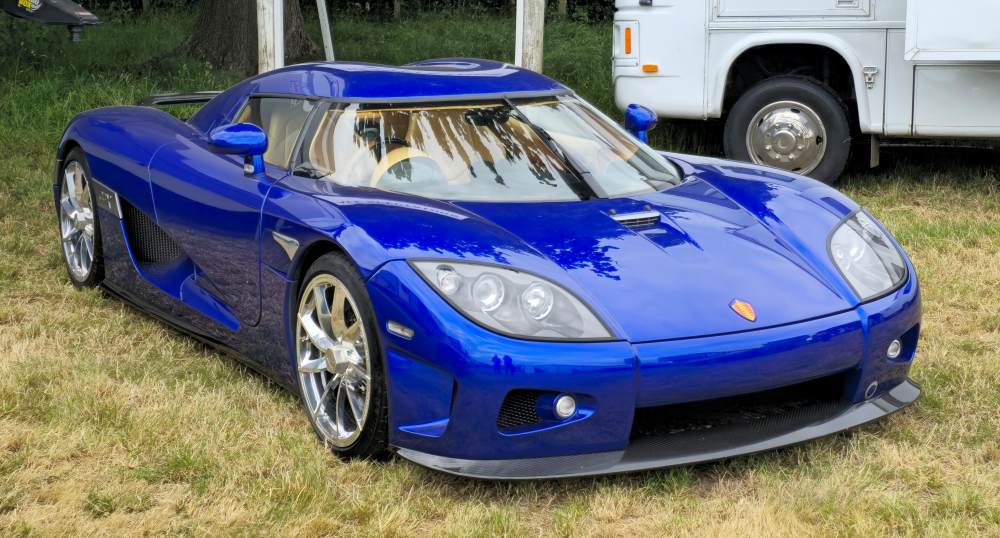
The CCX — which stands for Competition Coupe X — was a landmark model for Koenigsegg because it was the company’s first car designed to meet safety and environmental regulations in markets worldwide, including the United States. Introduced in 2006 with a base price of $695,000, the CCX represented a significant expansion of the brand’s global ambitions.
Powered by a 4.7-liter twin-supercharged V8 engine producing 806 horsepower and 678 lb-ft of torque, the CCX reaches a top speed of 245 mph and completes the 0 to 60 mph sprint in 3.2 seconds. It also gained notoriety through a memorable appearance on Top Gear, where the car proved challenging to drive on the show’s test track — a challenge that Koenigsegg subsequently addressed with an optional rear wing that significantly improved high-speed stability.
The CCX also demonstrated Koenigsegg’s mastery of lightweight construction, with its carbon fiber body and chassis keeping the car well under 1,200 kilograms despite its substantial power output. For many enthusiasts worldwide, the CCX was their first introduction to Koenigsegg as a serious contender in the global hypercar arena.
Feature | Details |
Engine | Twin-supercharged 4.7L V8 |
Horsepower | 806 hp |
0–60 mph | ~3.2 seconds |
Top Speed | 245 mph |
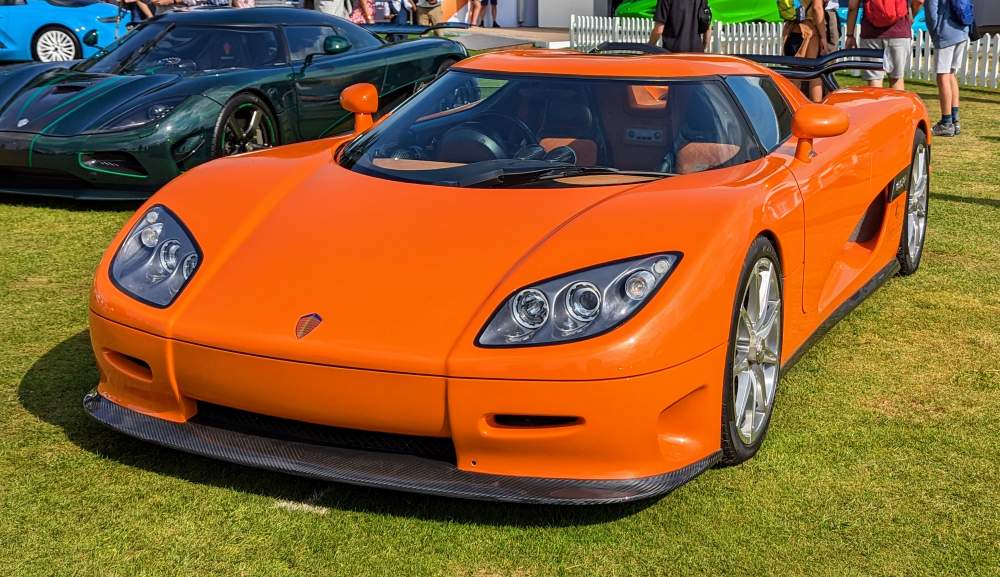
The Koenigsegg CCR holds a special place in automotive history: in 2005, it claimed the title of the world’s fastest production car with a verified top speed of 241.1 mph, surpassing the legendary McLaren F1 that had held the record for over a decade. That moment announced to the world that Koenigsegg was not merely a niche Swedish curiosity — it was a genuine world beater.
Introduced in 2004 with a base price of $650,000, the CCR is powered by a 4.7-liter twin-supercharged V8 engine developing 806 horsepower and 920 Nm of torque. Its lightweight carbon fiber construction and aerodynamically optimized body were instrumental in enabling its record-breaking performance.
What the CCR established above all else was a template for Koenigsegg’s identity: an underdog from Sweden with the technical capability and the audacity to beat the world’s most celebrated automotive icons on their own terms. Every Koenigsegg that followed, from the Agera to the Jesko, traces its DNA back to the philosophy embodied in the CCR.
Feature | Details |
Engine | Twin-supercharged 4.7L V8 |
Horsepower | 806 hp |
0–60 mph | ~3.2 seconds |
Top Speed | 241.1 mph (world record, 2005) |
Koenigsegg occupies a unique position in the hypercar landscape. Unlike Bugatti, which has historically leveraged the full resources of the Volkswagen Group to develop its cars, or Ferrari, which benefits from decades of Formula 1 technology transfer, Koenigsegg builds everything in-house with a comparatively tiny team. That makes its achievements all the more remarkable.
Consider the comparison with a few of its closest rivals:
Bugatti Chiron ($3+ million): The Chiron is a masterpiece of engineering and luxury, capable of over 300 mph in its Super Sport form. But it relies heavily on supplier components and lacks the lightweight ethos that defines Koenigsegg. The Regera, for example, offers comparable power in a significantly lighter package with more advanced hybrid architecture.
Pagani Huayra ($2.4 million): Pagani and Koenigsegg share a commitment to artisanal craftsmanship and exclusivity, but where Pagani leans into theatrical design and bespoke interior theater, Koenigsegg prioritizes engineering-led performance. The Jesko’s Light Speed Transmission has no equivalent anywhere in the industry.
Ferrari SF90 Stradale ($500,000+): Ferrari’s flagship hybrid represents extraordinary engineering from one of the world’s greatest manufacturers. But the SF90’s 986 horsepower and hybrid technology, while impressive, pales against the Gemera’s 1,700-horsepower hybrid system in a car that also seats four passengers.
McLaren P1 ($1.15 million): The P1 is a landmark hypercar in its own right, but the Agera RS’s 277.9 mph world record speaks for itself.
Koenigsegg does not merely compete with these brands — it regularly outperforms them on the metrics that matter most to serious performance enthusiasts.
For those drawn to the world of extreme automotive performance, DRMLXRY exists to bridge the gap between aspiration and experience. Operating across Detroit, MI and Miami, FL, DRMLXRY curates access to some of the most exceptional vehicles on the planet, offering both acquisition services and exclusive driving experiences for those who demand the very best.
The Koenigsegg lineup represents exactly the kind of engineering excellence and uncompromising exclusivity that DRMLXRY was built to celebrate. Whether you are seeking to add a Jesko Absolut to an existing collection, experience the hybrid marvel of the Regera firsthand, or simply explore what ownership of one of the world’s rarest cars might look like, DRMLXRY’s team has the expertise, relationships, and passion to make it happen.
In Detroit, MI — a city whose automotive heritage runs deeper than almost anywhere else on earth — DRMLXRY connects enthusiasts with vehicles that represent the cutting edge of what cars can be, honoring the spirit of innovation that the city has always embodied. In Miami, FL, where the culture of automotive excellence is woven into the fabric of daily life, DRMLXRY provides access to hypercars that match the ambition and energy of one of America’s most dynamic cities.
Beyond the pure thrill of ownership, Koenigsegg cars represent a compelling investment proposition for several reasons:
Rarity and Scarcity: With most models limited to double-digit production numbers, supply is structurally constrained. As demand for elite collector cars continues to grow globally, the scarcity of Koenigsegg vehicles positions them favorably for long-term value retention and appreciation.
Technological Significance: Koenigsegg’s innovations — freevalve engines, Direct Drive hybrid systems, Light Speed Transmission — represent genuine technological breakthroughs. Cars that mark pivotal moments in engineering history tend to hold their cultural and monetary value.
Bespoke Craftsmanship: Every Koenigsegg is essentially a one-off creation built to individual specification. The craftsmanship, materials, and personalization involved in each car make them irreplaceable by definition.
World Record Pedigree: Koenigsegg cars have held the world’s fastest production car record multiple times. Few assets carry the cachet of a certified world record holder.
Growing Global Recognition: As Koenigsegg’s profile continues to rise internationally, the demand for its vehicles among collectors in Asia, the Middle East, and the Americas continues to expand, broadening the potential buyer pool for resale.
From the CCR’s historic speed record in 2004 to the Jesko Absolut’s theoretical pursuit of 330 mph today, Koenigsegg’s journey is one of the great stories in modern automotive history. What Christian von Koenigsegg began as a personal dream in a Swedish hangar has grown into a global symbol of engineering excellence, artistic craftsmanship, and competitive audacity.
Each model in this list tells a chapter of that story — from the diamond-encrusted rarity of the Trevita to the family-friendly revolution of the Gemera, from the world record of the Agera RS to the seamless hybrid power of the Regera. Together, they represent not just the most expensive Koenigsegg cars money can buy, but some of the most significant automotive achievements of our era.
For those ready to engage with this world — whether as a collector, an investor, or a passionate enthusiast — DRMLXRY in Detroit, MI and Miami, FL stands ready to guide you through every step of that journey.
Koenigsegg cars command premium prices due to their extremely limited production runs, proprietary technologies developed entirely in-house, bespoke craftsmanship, and record-breaking performance capabilities. Each car represents hundreds of hours of skilled handwork and incorporates engineering innovations unavailable in any other production vehicle.
Yes, most Koenigsegg models are road legal in their respective markets, though regulations vary by country and region. Some models, like the CCX, were specifically engineered to comply with global safety standards.
The Jesko Absolut is theoretically capable of exceeding 330 mph, which would make it the fastest production car ever built if verified. Its aerodynamic design and 1,600-horsepower engine make this figure plausible, though a formal top-speed record attempt has not yet been conducted.
The CCXR Trevita is the rarest Koenigsegg ever produced, with only two examples ever built out of a planned run of three.
The Regera uses a revolutionary Direct Drive system that eliminates the traditional multi-speed gearbox entirely. Its hybrid powertrain integrates three electric motors with a V8 engine to deliver seamless, gapless acceleration across the entire speed range.
Yes, extensively. Buyers work directly with the Koenigsegg factory to specify virtually every aspect of their vehicle, including paint, interior materials, carbon fiber weave patterns, wheel designs, and in some cases, powertrain configurations.
Both brands occupy the pinnacle of hypercar performance, but their philosophies differ. Bugatti emphasizes luxury and refinement alongside speed, drawing on the resources of a major automotive group. Koenigsegg is a smaller, fully independent company that develops all of its core technologies in-house, giving it an agility and innovative edge that its larger rivals struggle to match.
The Gemera produces the highest combined system output at 1,700 horsepower, though the Jesko Absolut and Jesko Attack both achieve 1,600 horsepower from their combustion engines alone on E85 fuel.
Koenigsegg has demonstrated advanced hybrid technology through the Regera and Gemera, but the company has been cautious about fully electric vehicles given the performance and weight compromises current battery technology requires. Christian von Koenigsegg has expressed interest in evolving powertrains as battery technology advances.
DRMLXRY operates in Detroit, MI and Miami, FL, providing access to exotic and hypercar experiences and acquisition services for buyers interested in Koenigsegg and other elite marques.
YOU MIGHT ALSO LIKE: Top 10 Most Expensive Maserati Cars in the World