Rent Now In Miami: (786)-999-8288
Rent Now In Detroit: (313) 447-1684
Rent Now In Miami: (786) 999-8288
Rent Now In Miami: (786)-999-8288
Rent Now In Detroit: (313) 447-1684
Rent Now In Miami: (786) 999-8288
Rent Now In Detroit: (313) 447-1684
Rent Now In Miami: (786) 999-8288

Maserati. The name alone conjures images of sun-drenched Italian roads, roaring engines echoing off cobblestone streets, and the kind of automotive artistry that transcends mere transportation. Since the brand’s founding in Bologna in 1914, Maserati has occupied a unique space in the automotive world — sitting at the intersection of breathtaking performance, opulent luxury, and a proud racing heritage that very few manufacturers can rival.
Unlike mass-market luxury brands, Maserati has always operated with an air of exclusivity. Production numbers are intentionally limited. Materials are painstakingly selected. Each model carries within it the DNA of decades of motorsport triumph and old-world Italian craftsmanship. These aren’t just cars — they’re rolling sculptures, mechanical poetry, and financial investments all wrapped into one.
Whether you’re a seasoned collector with a climate-controlled garage full of Italian exotica, an automotive enthusiast who studies horsepower figures the way others study spreadsheets, or simply someone who appreciates the pinnacle of what human engineering and artistry can achieve, this list is for you. We’re diving deep into the top 10 most expensive Maserati cars ever made — exploring not just their specifications, but the stories, the philosophy, and the legacy that make each one worth its astonishing price tag.
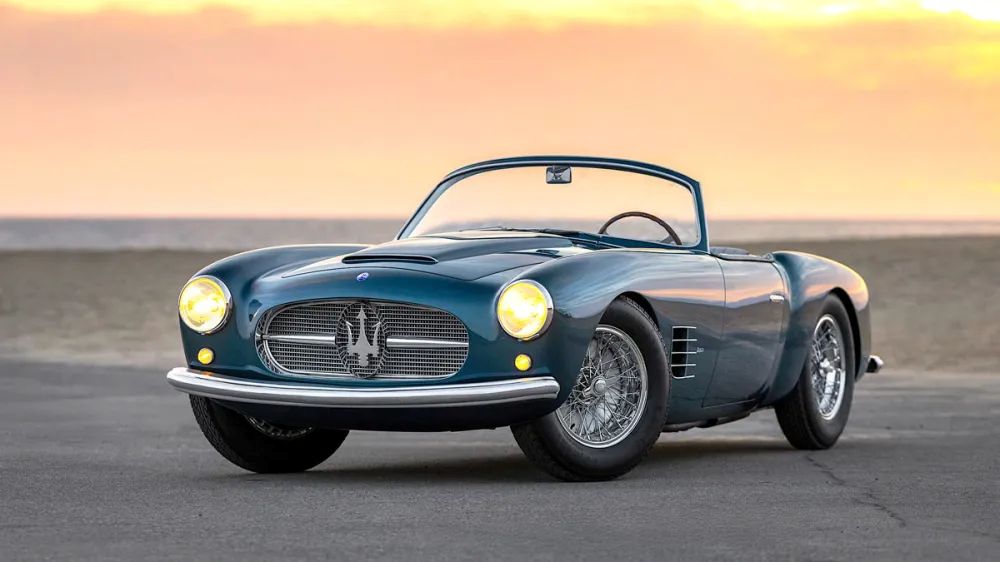
At the very top of our list sits a car that most people will never see in person, let alone drive. The Maserati A6G/2000 Spyder, bodied by the legendary Zagato coachbuilder, is widely regarded as one of the most beautiful automobiles ever constructed. Built in the early-to-mid 1950s, this car emerged during a golden era of Italian coachbuilding, when craftsmen with chisels, hammers, and an intimate understanding of form would shape aluminum sheets by hand into swooping, organic bodywork that no machine could replicate.
The Zagato-bodied A6G/2000 is particularly special even among its already-rare siblings. Zagato’s trademark double-bubble roofline — designed originally to give clearance for helmeted drivers — gives the car an instantly recognizable silhouette. The bodywork is lightweight aluminum, formed by skilled artisans whose names are long forgotten but whose work endures as some of the greatest in automotive history.
Under the hood sits a 2.0-liter inline-six engine producing 160 horsepower — a figure that sounds modest today but was genuinely impressive for the era. It allowed the car to reach 130 mph flat out, with a 0-60 mph time of around 8.5 seconds. These weren’t just numbers on paper; Maserati’s road cars of this era were closely linked to their racing counterparts, and the A6G/2000 reflected genuine motorsport pedigree in every component.
Only a handful of Zagato-bodied examples were ever completed, making each surviving car a near-irreplaceable piece of automotive heritage. When one does surface at auction — which happens rarely — bidding regularly climbs past the $4 million mark, and experts believe values will only continue to rise.
Key Specifications:
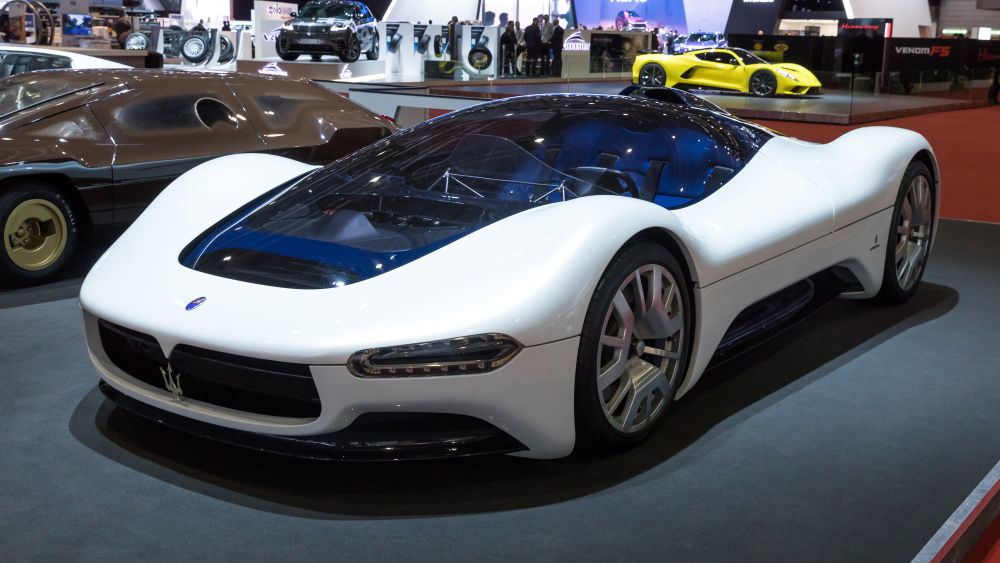
In 2005, Maserati celebrated its 75th anniversary with a concept car so radical, so visually otherworldly, that it felt less like a birthday celebration and more like a transmission from the future. The Birdcage 75th Concept — named in homage to the legendary Tipo 60/61 “Birdcage” racing cars of the 1960s — was created in collaboration with Pininfarina and represented the absolute cutting edge of automotive design thinking at the time.
The body is constructed almost entirely from carbon fiber, with a sweeping glass canopy that arcs dramatically over the entire passenger compartment. There are no traditional doors; the canopy tilts forward to allow entry, framing the driver and passenger in an almost theatrical manner. The interior, viewed from outside, looks like the cockpit of a spacecraft — minimalist, purposeful, and strikingly beautiful.
Powering this vision of the future is a 6.0-liter V12 engine sourced from Ferrari — a reminder that Maserati and Ferrari share more than just Italian DNA. The engine produces 700 horsepower, propelling the lightweight carbon chassis to 60 mph in just 3.5 seconds and on to a top speed of 217 mph. These figures would be remarkable in any production supercar; in a bespoke concept of this caliber, they’re simply extraordinary.
The Birdcage 75th never entered production, which only adds to its mystique and value. It remains one of the most celebrated concept cars of the 21st century and a vivid demonstration of what Maserati is capable of when given complete creative freedom.
Key Specifications:
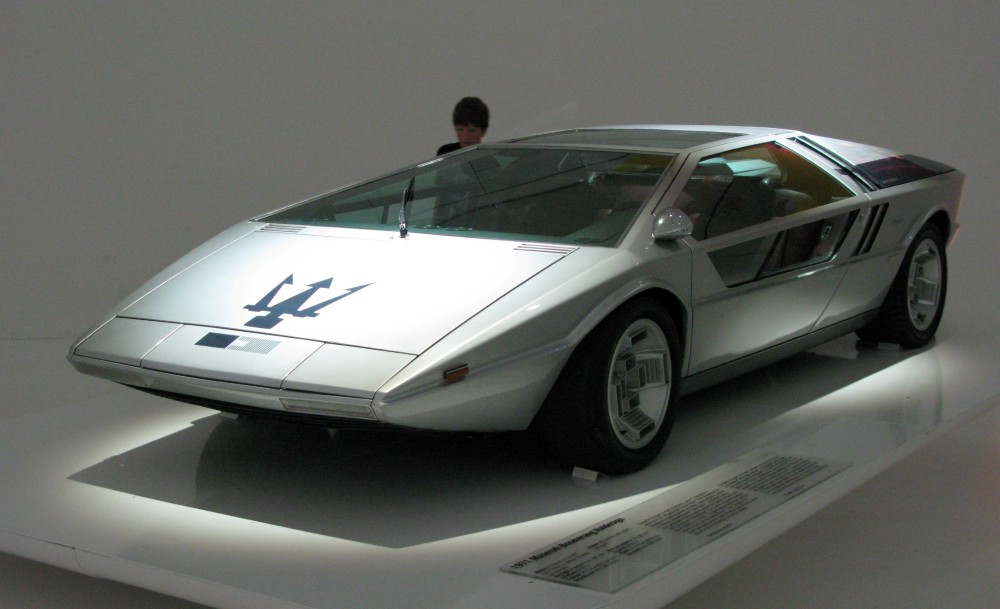
Few cars in automotive history have been as genuinely influential as the Maserati Boomerang. Unveiled at the 1971 Turin Motor Show as a static model and then transformed into a fully functional vehicle by 1972, the Boomerang was the work of Giorgetto Giugiaro — one of the most talented automotive designers who ever lived. It introduced the world to the wedge-shaped design language that would define the supercar aesthetic for the following two decades.
The Boomerang’s lines are almost impossibly sharp. Every panel seems to slice through the air at an acute angle, creating a form that looks perpetually in motion even while standing still. The interior was equally revolutionary, featuring a circular steering wheel hub that housed every instrument and control in a single bold cluster — a concept that was decades ahead of its time.
Beneath the dramatic skin sits a 4.7-liter V8 engine producing 310 horsepower, good for a top speed of 186 mph and a 0-60 mph sprint of 6.8 seconds. These were serious numbers for 1971, and the Boomerang could hold its own against any performance car of the era.
Only one example was ever built, making it the ultimate collector’s piece. It has appeared at several major auctions and events over the decades, each time commanding enormous attention and multi-million-dollar valuations. For automotive historians, the Boomerang isn’t just a car — it’s a cultural artifact.
Key Specifications:
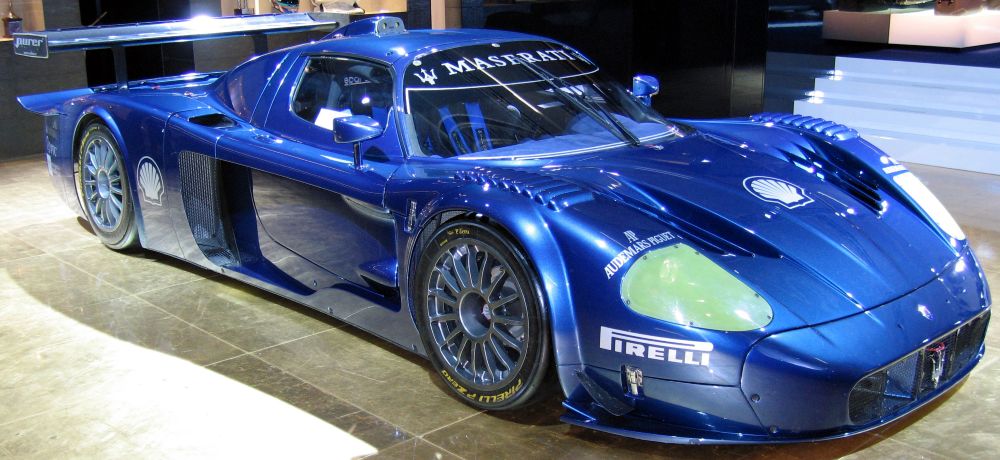
The Maserati MC12 is already one of the most exclusive road cars ever built — just 50 examples were produced for the street. But the MC12 Corsa takes exclusivity to an entirely different level. Built purely for track use and delivered only to the most elite Maserati clients, just 12 examples of the Corsa were ever completed.
The MC12 itself was built to allow Maserati’s return to GT racing, and it shares its carbon fiber monocoque chassis with the Ferrari Enzo — the result of Maserati’s then-close relationship with Maranello. The Corsa version strips away the minimal concessions to road usability found in the standard MC12 and replaces them with full racing specification: an even more aggressive aerodynamic package, race-tuned suspension, and a 6.0-liter V12 engine that, in Corsa trim, pushes out a thunderous 755 horsepower.
The result is a car that accelerates from 0-60 mph in just 3.4 seconds and reaches a top speed of 205 mph — on a race track, with a roll cage and a fire suppression system for company. The MC12 Corsa competed in the FIA GT Championship and won its class outright, cementing its legacy as not just a beautiful piece of engineering but a genuine racing champion.
Owning one today means owning a piece of motorsport history, and with only 12 in existence, the MC12 Corsa is one of the hardest cars in the world to acquire at any price.
Key Specifications:
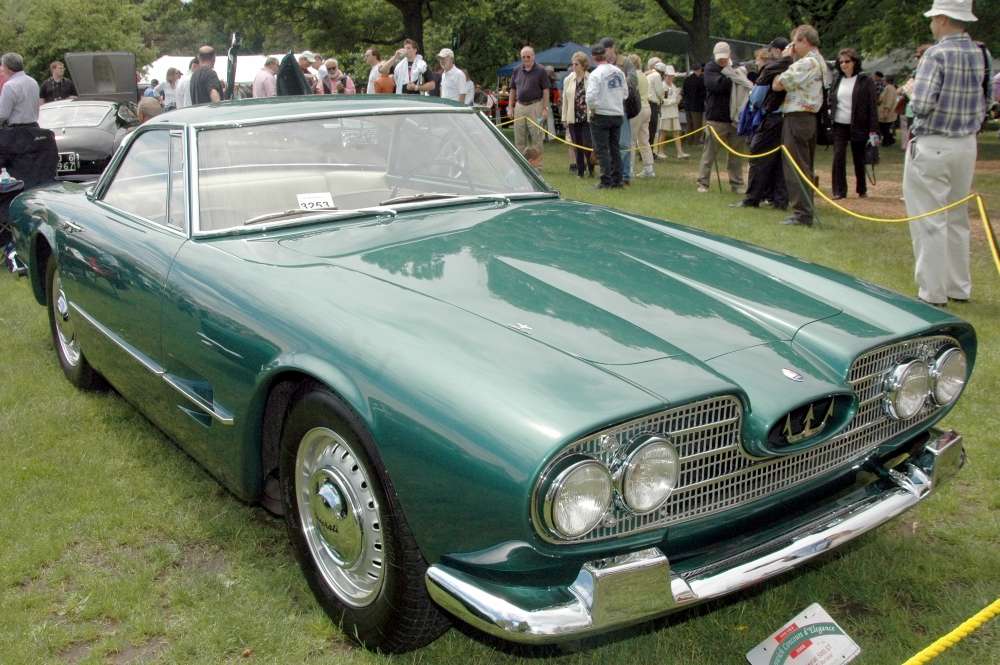
In the late 1950s, the Shah of Iran wanted a Maserati with the most powerful engine available. Maserati’s response was to shoehorn a 5.0-liter V8 engine — originally developed for the 450S racing car — into an elegant grand touring body. The result was the 5000 GT, a car built not for the masses but for royalty, industrialists, and the wealthiest individuals of the era.
Between 1959 and 1965, Maserati produced just 34 examples of the 5000 GT, each bodied by a different coachbuilder — including Allemano, Touring, Frua, Bertone, and Ghia — meaning that no two cars are exactly alike. Each is a unique expression of Italian coachbuilding at its finest, tailored to the exact tastes of its original owner.
The 5.0-liter V8 produces 340 horsepower and delivers a top speed of 170 mph, making the 5000 GT not just beautiful but genuinely fast. With a 0-60 mph time of 7.2 seconds, it was one of the quickest grand tourers money could buy in 1960.
Today, surviving examples are among the most coveted classic Italian cars in existence. The combination of royal provenance, handbuilt coachwork, racing-derived mechanicals, and extreme rarity ensures that the 5000 GT commands prices well into seven figures whenever a fine example changes hands.
Key Specifications:
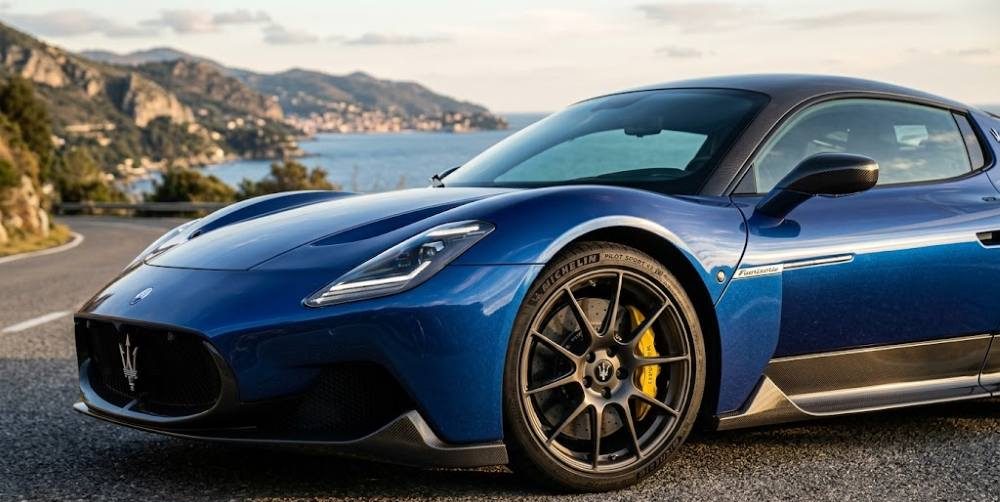
The MC20 was already a landmark car when it launched in 2020 — Maserati’s first genuine homegrown supercar in over 15 years, built around the extraordinary Nettuno engine: a twin-turbocharged 3.0-liter V6 developed entirely in-house using Formula 1-derived pre-chamber combustion technology. But the Fuoriserie Edition takes the MC20 concept and elevates it into something approaching automotive haute couture.
“Fuoriserie” is Italian for “outside the series” — and that name tells you everything you need to know. Rather than choosing from a standard options list, buyers of the Fuoriserie Edition work directly with Maserati’s bespoke division to create a car that is entirely their own. The palette of paint options is virtually limitless, with colors that can be matched to anything from a favorite gemstone to a family heirloom. Interior materials include exclusive leathers, rare fabrics, and custom carbon fiber weaves unavailable on any other model.
The performance foundation is the same breathtaking MC20 platform: 621 horsepower, a carbon fiber monocoque chassis, and a 0-60 mph time of just 2.9 seconds on the way to a 202 mph top speed. But when you’re paying Fuoriserie prices, you’re paying as much for the experience of creation as for the car itself.
Key Specifications:
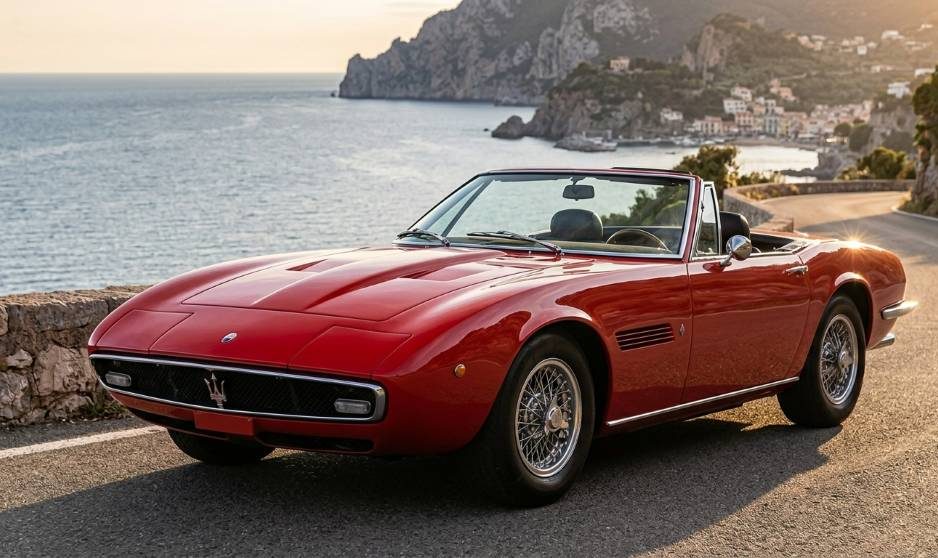
The original Ghibli — not to be confused with the modern sedan that carries the same name — is one of the most beautiful cars to emerge from the 1960s Italian design renaissance. Designed by Giorgetto Giugiaro during his time at Ghia, the Ghibli was unveiled in 1966 and immediately hailed as a masterpiece. The Spyder SS variant, with its open-top body and uprated engine, sits at the very top of the Ghibli hierarchy.
Power comes from a high-output version of Maserati’s 4.7-liter V8, producing 335 horsepower and driving the rear wheels through a five-speed manual gearbox. Top speed reaches 174 mph — genuinely extraordinary performance for a convertible of the era — with 0-60 mph dispatched in 6.8 seconds. The exhaust note of this engine, particularly in open-air form, is something that stays with you long after the drive is over.
The Spyder body was even rarer than the coupe. Only a small number of Spyder SS examples were built, and finding one in original, unmolested condition today is the work of years rather than weeks. For collectors of classic Italian cars, the Ghibli Spyder SS represents one of the finest and most desirable expressions of the era — a car that is as emotionally compelling as it is financially valuable.
Key Specifications:
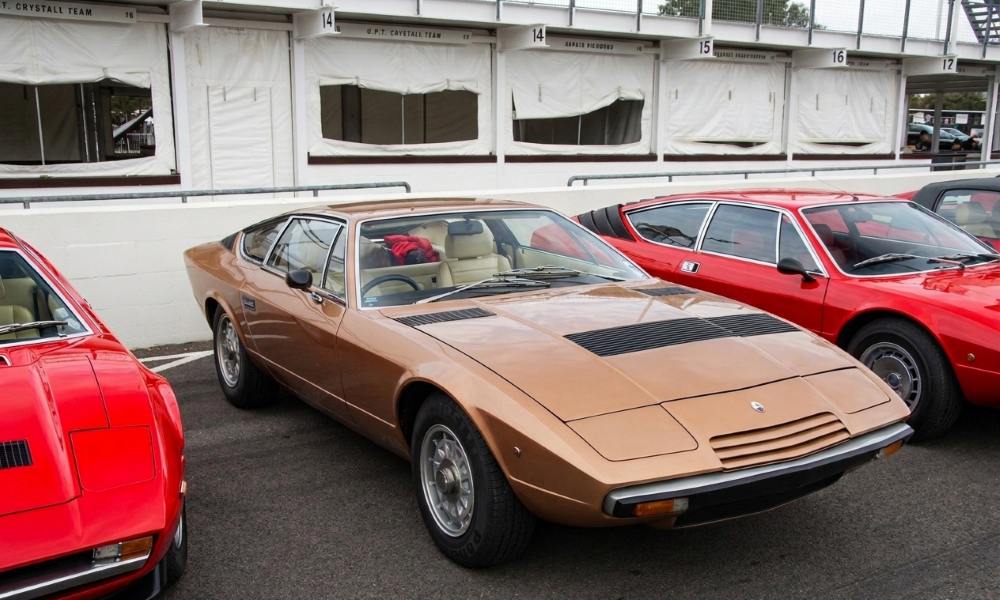
Named after the hot desert wind that sweeps across North Africa and the Mediterranean, the Maserati Khamsin arrived in 1974 wearing a body designed by Marcello Gandini at Bertone — the same designer responsible for the Lamborghini Countach and the Lancia Stratos. The result is as dramatic as those credentials suggest: a bold, angular wedge shape with a distinctive glass rear window that wraps around and doubles as an engine cover, offering a tantalizing view of the mechanical components beneath.
The Khamsin was more than a pretty shape, however. It featured sophisticated hydraulic power steering, a hydraulic clutch, and hydraulically operated pedals — advanced systems that were unusual for the period and gave the car a remarkably modern driving feel. Power came from a 4.9-liter V8 producing 320 horsepower, enabling a 170 mph top speed and 0-60 mph in 6.5 seconds.
Production ran until 1982, with a total of 430 units completed — making the Khamsin considerably rarer than its contemporary rivals from Porsche or Ferrari. In the decades since production ended, values have risen steadily as collectors have come to appreciate the Khamsin’s unique blend of avant-garde design, sophisticated engineering, and genuine performance. Finding an example in excellent original condition today commands close to seven figures.
Key Specifications:
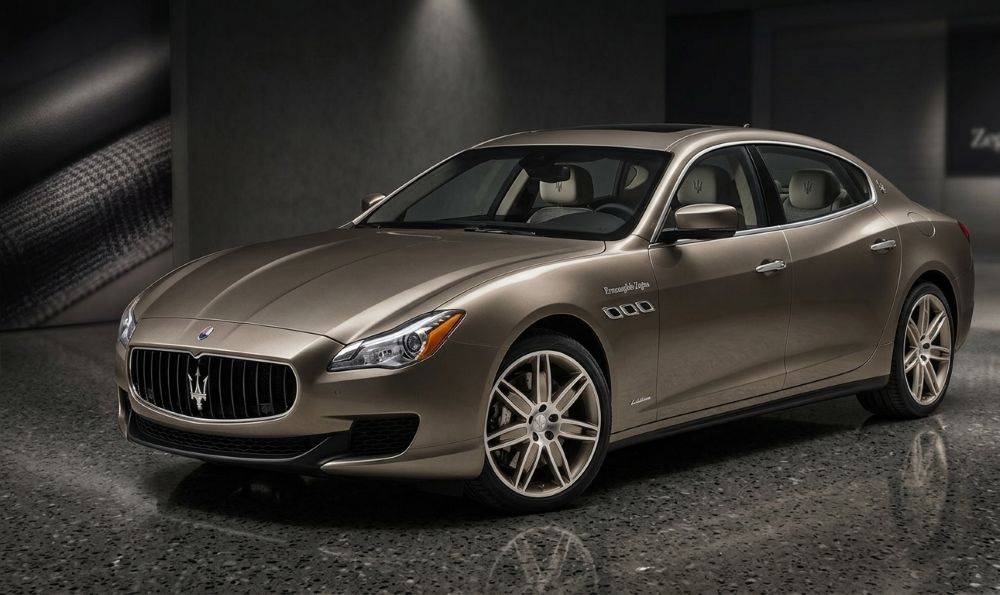
What happens when one of Italy’s greatest car manufacturers collaborates with one of its most prestigious fashion houses? The Maserati Quattroporte Ermenegildo Zegna Edition — a car that treats the interior as seriously as any bespoke suit made on Milan’s Via Montenapoleone.
Ermenegildo Zegna, the luxury menswear brand founded in the Italian Alps in 1910, brought their expertise in premium fabrics and meticulous tailoring to the Quattroporte’s cabin. The result is an interior of extraordinary refinement: Zegna’s finest silks and hand-stitched leathers cover every surface, with material quality that genuinely rivals the finest furniture or fashion. The experience of sitting inside is unlike any other production car.
Yet this is no mere fashion exercise. The Quattroporte Zegna Edition retains the full performance specification of the top-level Quattroporte, including the 3.8-liter twin-turbocharged V8 producing 523 horsepower. Top speed reaches 190 mph, and 0-60 mph arrives in 4.6 seconds — figures that would embarrass many dedicated sports cars. Only 100 examples were produced globally, making this collaboration as rare as it is refined.
Key Specifications:
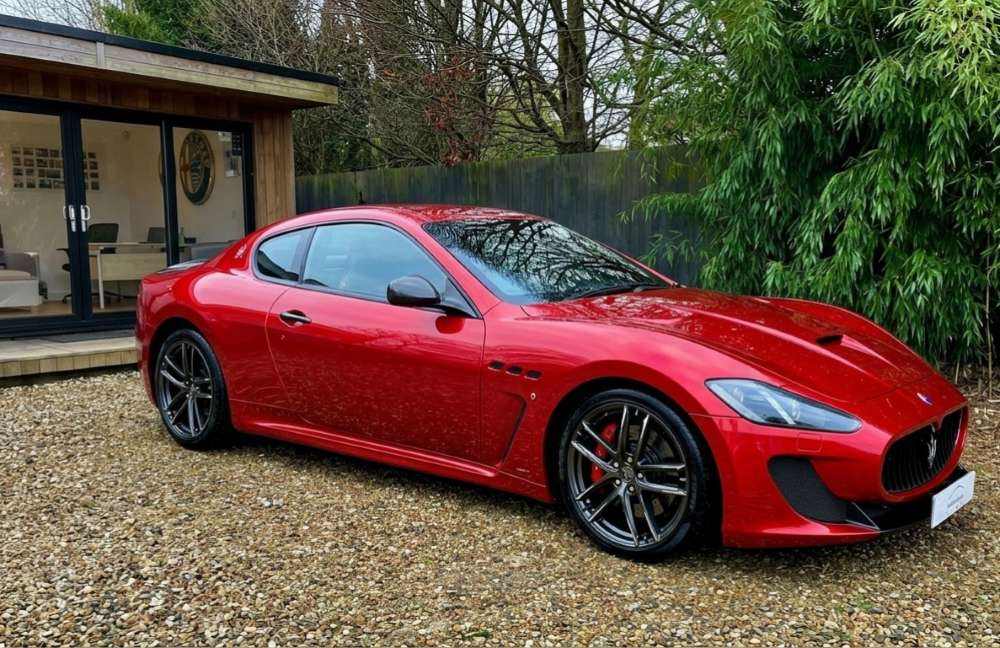
Produced to celebrate Maserati’s centennial anniversary, the GranTurismo MC Stradale Centennial Edition represents a fitting tribute to 100 years of Italian automotive excellence. Based on the already impressive MC Stradale — Maserati’s most track-focused GranTurismo variant — the Centennial Edition adds exclusive visual touches, bespoke color options, and interior detailing that set it apart from every other GranTurismo ever built.
The mechanical package is genuinely formidable: a 4.7-liter V8 naturally aspirated engine producing 454 horsepower, paired with a six-speed automated manual transmission that fires off gear changes with racing-car sharpness. Top speed reaches 187 mph, and 0-60 mph takes just 4.5 seconds — remarkable figures for a genuine grand touring car with a proper back seat and a usable luggage compartment.
Aerodynamic enhancements developed with motorsport input reduce lift at high speed, while the suspension calibration threads the needle between outright track performance and long-distance touring comfort. The GranTurismo sound — that howling, naturally aspirated V8 singing its way to the 7,200 rpm redline — is widely considered one of the greatest automotive soundtracks ever produced.
Key Specifications:
What unites every car on this list — from the hand-hammered aluminum Zagato Spyder to the hypermodern MC20 Fuoriserie — is the philosophy that has defined Maserati for over a century. Every car the brand has produced has been, in some fundamental sense, unnecessary. No one needs 700 horsepower. No one requires coachwork shaped by hand in a Turin workshop. No one must have an interior trimmed in Zegna silk.
But that’s precisely the point. The most expensive Maseratis exist not because they fill a functional need, but because they fulfill something deeper — the human desire to be surrounded by excellence, to experience machinery at its most refined, and to own a piece of history that will outlast its owner by decades or centuries.
The values of these cars reflect that understanding. Classic Maseratis continue to appreciate in value because supply is fixed and demand among serious collectors only grows. Modern limited editions like the Fuoriserie command premiums because buyers understand that true exclusivity — the knowledge that your car is unlike any other in the world — is worth paying for.
For those who dream of experiencing the Maserati ownership feeling without a multi-million-dollar commitment, DRMLXRY offers access to some of the world’s finest exotic and luxury vehicles. Serving clients in Detroit, MI and Miami, FL, DRMLXRY provides an unmatched fleet of premium automobiles — from Italian supercars to ultra-luxury sedans — available for special occasions, weekend escapes, film productions, and unforgettable driving experiences.
Whether you want to arrive at a Miami rooftop event in a roaring Maserati, cruise the Detroit lakefront in a vehicle that turns every head on the road, or simply treat yourself to an experience that most people only see in magazines, DRMLXRY makes it accessible.
The service is built around the same values that define the cars on this list: exclusivity, attention to detail, and an unwillingness to compromise on quality. Every vehicle is maintained to the highest standard, and every customer interaction reflects the belief that the experience of luxury should be seamless from first contact to final delivery.
The Maserati A6G/2000 Spyder by Zagato currently holds the record for highest auction prices, with the finest examples selling for $4 million or more. Earlier auction records were set by the Birdcage 75th Concept and certain MC12 examples.
Maserati’s prices reflect the intersection of multiple value drivers: limited production numbers, hand-built Italian craftsmanship, genuine racing heritage, powerful and often bespoke engines, and a brand history that stretches back over a century. The rarest models also benefit from the fundamental economics of scarcity — there are simply more collectors than there are cars.
Among production models, the Maserati MC20 is currently the fastest, reaching 0-60 mph in 2.9 seconds and achieving a top speed of 202 mph. Among track-only cars, the MC12 Corsa with its 755-horsepower V12 is even more extreme.
Historically, yes — particularly for well-preserved, numbers-matching examples of rare models like the Ghibli Spyder SS, the 5000 GT, and the A6G/2000. As with any collectible, condition, provenance, and originality are the key factors that determine long-term value appreciation.
Beyond its extraordinary performance, the Fuoriserie Edition is defined by total personalization. Buyers work directly with Maserati’s bespoke division to create a car that is genuinely unique — from exclusive paint formulations to custom interior materials unavailable on any other model.
Yes. DRMLXRY offers luxury and exotic vehicle rentals in both Detroit, MI and Miami, FL, providing access to a curated fleet of premium automobiles for any occasion.
Maserati occupies a distinct position that combines both. Unlike Ferrari, which is primarily a performance brand, or Rolls-Royce, which is primarily a luxury brand, Maserati has always sat at the intersection — offering genuine performance credentials wrapped in Italian luxury and style.
A total of 430 Khamsin units were built between 1974 and 1982, making it significantly rarer than contemporary rivals. Finding one in excellent, original condition today is genuinely difficult.
Fuoriserie is Maserati’s personalization division, offering customers the ability to specify their vehicles with an almost unlimited range of bespoke options — from unique paint colors and material combinations to fully custom interiors. The program is the Italian equivalent of Rolls-Royce’s Bespoke or Bentley’s Mulliner services.
The Maserati Levante SUV or the Quattroporte sedan offer the most practical balance of performance and daily usability. Both provide genuine Maserati character — including the brand’s distinctive engine sound and handling feel — in formats suited to regular driving.
YOU MIGHT ALSO LIKE: The Top 10 Most Expensive Koenigsegg Cars Money Can Buy