Rent Now In Miami: (786)-999-8288
Rent Now In Detroit: (313) 447-1684
Rent Now In Miami: (786) 999-8288
Rent Now In Miami: (786)-999-8288
Rent Now In Detroit: (313) 447-1684
Rent Now In Miami: (786) 999-8288
Rent Now In Detroit: (313) 447-1684
Rent Now In Miami: (786) 999-8288

Porsche has occupied a unique position in automotive culture since the 1950s. Unlike many luxury brands that built their reputations primarily on road cars, Porsche earned its credibility on the racetrack first. Victories at Le Mans, Daytona, and the Nürburgring gave the brand an authenticity that money alone cannot manufacture. That racing pedigree feeds directly into collector demand, and collector demand feeds directly into price.
Beyond motorsport, Porsche has consistently produced cars that are genuinely rewarding to drive, not just impressive to own. This dual identity, as both a drivers’ car and a status symbol, creates a broader base of buyers than most exotic marques enjoy. When a genuinely rare, historically significant Porsche reaches the auction block, the bidding war that follows reflects decades of accumulated desire.
According to Hagerty, the Porsche 911 is consistently one of the most tracked and valued collector cars in the United States, with a diverse range of buyers spanning first-time collectors to seasoned investors.
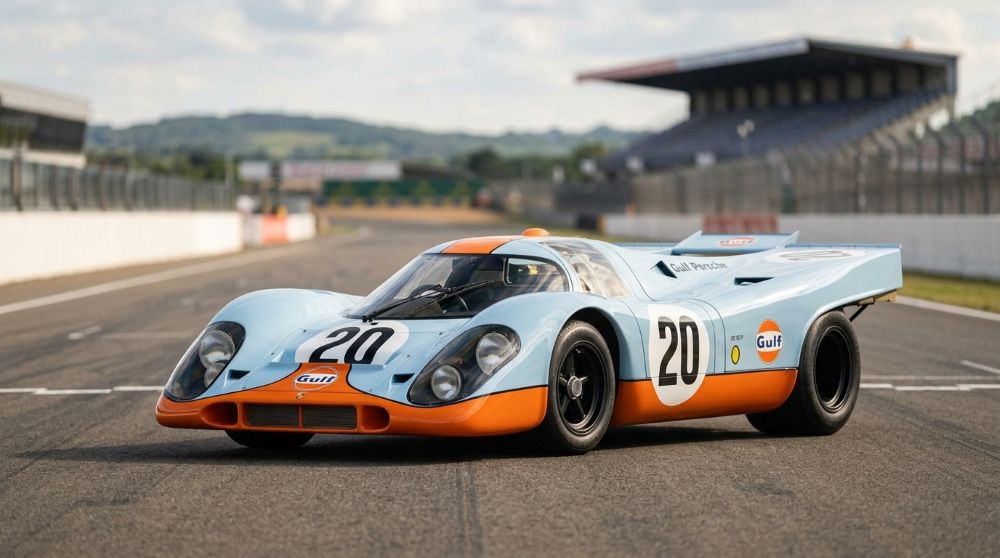
The 917K is the car that won Porsche its first overall victory at Le Mans in 1970. The specific chassis driven by Hans Herrmann and Richard Attwood sold for approximately $14 million, making it the highest-confirmed sale for a Porsche at the time of writing. Its flat-12 engine, legendary Gulf or Martini liveries, and cinematic fame from Steve McQueen’s film Le Mans have made the 917 the defining icon of Porsche’s racing legacy.
The 550 Spyder predates the 911 and represents Porsche’s first purpose-built racing car. Lightweight, mid-engined, and devastatingly quick for its era, surviving examples are extraordinarily rare. Well-documented cars with verifiable racing history have sold in the $4.5 to $5.5 million range at U.S. auctions.
The Carrera RS 2.7 is arguably the most important 911 ever built. Produced to satisfy homologation requirements for Group 4 racing, it combined a lightweight body with a punchy 2.7-liter engine. U.S. collector prices for low-mileage, matching-numbers examples have climbed past $1.5 million. Its cultural and motorsport significance makes it a cornerstone of any serious Porsche collection.
The 959 was a technological watershed. All-wheel drive, a twin-turbocharged flat-six, and advanced suspension management made it the most sophisticated road car of the 1980s. Originally priced around $225,000, top-condition examples now trade between $1.2 million and $1.7 million in the U.S. market. Notably, both Bill Gates and Ralph Lauren famously owned 959s.
Porsche built just 21 road-legal versions of the GT1 to meet homologation rules for the GT1 class at Le Mans. Mid-engined and water-cooled, it was unlike any 911 before or since. When these cars appear at auction, they regularly exceed $3 million, with strong examples reaching $3.5 million or more.
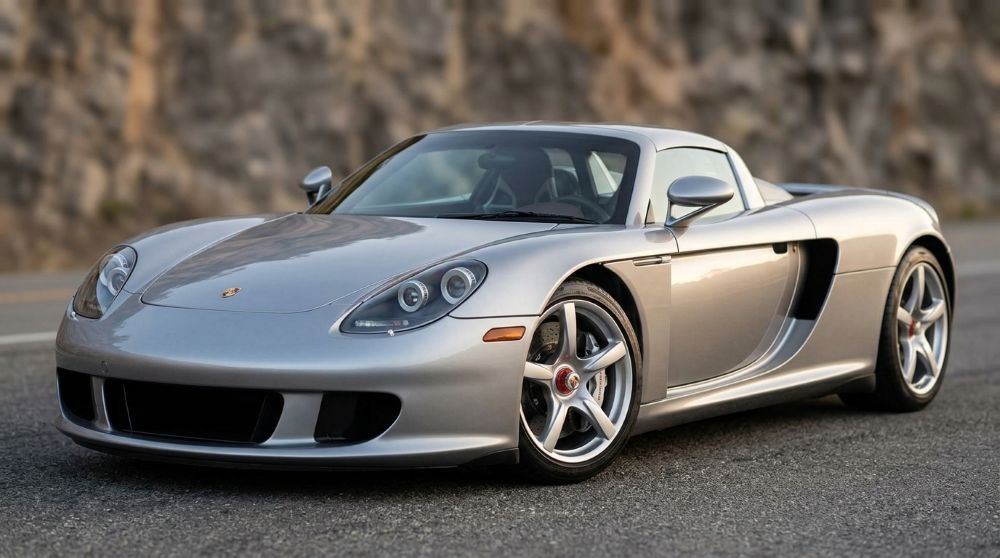
The Carrera GT represents the last of Porsche’s naturally aspirated V10 supercars. Built on a carbon-fiber monocoque with a racing-derived 5.7-liter V10 producing 605 horsepower, it remains one of the most visceral road cars ever produced. U.S. auction results for low-mileage examples have climbed well past $1 million, with pristine cars approaching $1.5 million. According to Car and Driver, the Carrera GT is widely regarded as one of the most demanding and rewarding supercars ever built.
The 908/02 was Porsche’s primary endurance racing weapon before the 917 arrived in full force. Lightweight and fast, surviving examples with legitimate race histories from events like the Targa Florio or Nürburgring command prices around $5 million. The combination of spyder bodywork, documented provenance, and period racing success makes these cars highly sought after.
The 918 Spyder was Porsche’s hybrid hypercar answer to Ferrari’s LaFerrari and McLaren’s P1. With 887 horsepower from a combined V8 and electric motor setup, it posted a sub-7-minute Nürburgring lap at launch. Only 918 units were built, and U.S. resale values have climbed steadily, with well-specified examples surpassing $1.7 million on the open market.
The 956 dominated Le Mans from 1982 through 1984, winning outright in all three years. As a group C prototype, it represented the apex of ground-effects aerodynamics combined with a turbocharged flat-six. Surviving race-winning chassis are among the most coveted motorsport artifacts in existence, with estimates placing the highest examples above $10 million.
The 906 was Porsche’s first fully purpose-built road-homologated racing car with a fiberglass body. It competed successfully at Le Mans, Daytona, and Sebring. Surviving examples in original, unrestored condition trade in the $2 to $2.5 million range, with particularly well-documented cars occasionally exceeding that.
Several factors consistently separate a Porsche worth a few hundred thousand dollars from one worth several million.
Racing history is the single biggest value driver. A 911 that raced at Sebring or Le Mans is categorically more valuable than an identical car that never left the road. Documented results, original logbooks, and period photographs all support provenance claims.
Numbers-matching originality matters enormously. Collectors pay a significant premium for cars where the engine, gearbox, and body panels are all original to the car. Restored cars are desirable, but unrestored originals command the highest prices.
Rarity amplifies everything else. The GT1 Strassenversion exists in only 21 examples. The 917K race cars number fewer than 40 worldwide. When a car is genuinely irreplaceable, price has a ceiling only as high as the wealthiest bidder’s desire.
Celebrity ownership adds a soft premium. Gates-owned 959s and McQueen-connected 917s carry documented stories that make them more compelling at auction.
According to RM Sotheby’s, Porsche consistently ranks among the top marques by total auction proceeds in North America, with collector interest showing no meaningful decline in 2026.
| Model | Era | Approx. Value (USD) | Key Factor |
| 1970 Porsche 917K | 1970 | ~$14,000,000 | Le Mans winning chassis |
| 1983 Porsche 956 | 1983 | ~$10,000,000 | Group C prototype, 3x Le Mans winner |
| 1969 Porsche 908/02 | 1969 | ~$5,000,000 | Endurance racing spyder |
| 1956 Porsche 550A Spyder | 1956 | ~$5,500,000 | First purpose-built racer |
| 1997 Porsche 911 GT1 | 1997 | ~$3,500,000 | 21 road cars built |
| 1966 Porsche 906 | 1966 | ~$2,500,000 | Fiberglass homologation racer |
| 2021 Porsche 918 Spyder | 2021 | ~$1,700,000 | Hybrid hypercar, 918 units |
| 2004 Porsche Carrera GT | 2004 | ~$1,500,000 | Naturally aspirated V10 |
| 1987 Porsche 959 | 1987 | ~$1,500,000 | Tech pioneer, AWD |
| 1973 Porsche 911 RS 2.7 | 1973 | ~$1,500,000 | Homologation 911 |
The pattern across the top 10 most expensive Porsche cars ever made is unmistakable: cars tied to specific race victories or built in extremely limited numbers occupy a different market tier than even exceptional road cars. A standard 1973 911 is worth perhaps $100,000 to $150,000. Add a documented Carrera RS specification with original Touring trim and a matching engine? The price multiplies many times over.
This same dynamic plays out with the Porsche Museum in Stuttgart, which actively preserves and displays many of the factory’s own race cars precisely because their historical significance is irreplaceable. When a similarly documented example enters private hands, collectors understand they are acquiring something that cannot be recreated.
The market for blue-chip Porsches has also proven resilient, according to Barrett-Jackson, one of the most prominent collector car auction houses in the United States, with significant Porsches featuring strong provenance continuing to find buyers at high prices even while some collector car segments have softened.
Not everyone has $5 million earmarked for a 550 Spyder, but that does not mean you cannot experience the thrill of Porsche ownership firsthand. Exotic & Luxury Car Rentals in Detroit gives enthusiasts a realistic path to driving a modern Porsche without the seven-figure commitment through exotic car rental services that make these experiences accessible at a fraction of the purchase price. Whether you want to feel the turbocharged pull of a 911 Carrera S on the highway or turn heads in a Cayenne Turbo, you can settle the debate between different models before committing to any purchase decision.
For those in the Midwest, accessing Exotic & Luxury Car Rentals is a practical way to experience what makes Porsche such a legendary brand.
The 1970 Porsche 917K with confirmed Le Mans race history holds the highest publicly confirmed sale price, with documented examples reaching approximately $14 million.
The 917K’s value stems from its direct role in Porsche’s first overall Le Mans victory in 1970, a moment considered the defining achievement in the brand’s motorsport history. Chassis with specific, verifiable race records from that era command prices that put them in a different category from virtually any other Porsche road or race car. Private sales may have exceeded this figure, but no higher public transaction has been confirmed.
Older Porsches with direct racing provenance are worth more because their historical significance is fixed and irreplaceable, while newer models can always be produced in additional quantities.
A 1969 908/02 that raced at the Nürburgring cannot be recreated. A modern 911 GT3 RS, no matter how capable, will always have more examples produced. Collectors pay a premium for objects whose historical context is frozen in time. The older car also benefits from decades of mythology, documented racing results, and period photography that build a narrative money alone cannot replicate.
Yes, the 918 Spyder has appreciated considerably from its original base price of approximately $845,000, with clean U.S. examples trading well above $1.5 million in 2026.
The 918 benefits from being the last of a specific era: a naturally aspirated V8 hybrid hypercar built before stricter emissions regulations changed what was possible. Its Nürburgring lap record, limited production run of 918 units, and position alongside the Ferrari LaFerrari and McLaren P1 in the so-called hypercar trinity have all contributed to sustained collector demand. Weissach Package cars, which delete certain comfort features for weight savings, command an additional premium.
The Carrera GT has shown consistent appreciation and is widely regarded as one of the more reliable long-term collector investments in the modern supercar category.
Its naturally aspirated V10 engine, carbon-fiber construction, and unassisted steering give it a driving character that modern supercars have largely moved away from, which keeps enthusiast demand high. Values for low-mileage, single-owner U.S. examples have climbed steadily, and there is no indication that demand will soften as the car ages into true classic status. That said, all collector car values carry market risk, and individual results depend heavily on condition, mileage, and documentation.
Most multi-million-dollar Porsches are technically drivable, but many owners choose not to add mileage given how significantly use affects their value.
The 917K, 956, and 908 are periodically campaigned in historic racing events, where owners accept that the activity carries both physical and financial risk. Road cars like the 959, Carrera GT, and 918 Spyder remain mechanically functional and legal on U.S. roads, but adding miles to a low-mileage example can reduce its auction value substantially. For most collectors at this level, the cars are maintained in running condition but driven sparingly, if at all.
The top 10 most expensive Porsche cars ever made share a common thread: they exist at the intersection of engineering ambition, motorsport history, and extreme rarity. Whether it is a 917K that clinched Le Mans glory or a GT1 Strassenversion built in a run of just 21 cars, each of these machines represents a moment in automotive history that cannot be repeated. Their values reflect not just what they are, but what they mean.
If owning one of these cars is beyond your current reach, that does not mean the Porsche experience is out of reach entirely. Exotic & Luxury Car Rentals in Detroit offers access to modern Porsche models that carry the same DNA as these legends, letting you put that flat-six soundtrack and precision steering to the test without a seven-figure commitment. Your next step is simple: browse available models, pick a date, and find out firsthand why Porsche has commanded this level of devotion for over seven decades.