
Table of Contents
Key Takeaways
- Ferrari prioritizes motorsport precision; Lamborghini prioritizes theater.
- Lamborghini leads on flagship horsepower in 2026.
- Ferrari covers more ground in grand touring.
- Both build elite supercars, but the driving character is fundamentally different.
- The right brand depends on the occasion, not the badge. Match the car to the trip: Ferrari for open roads and precision driving, Lamborghini for events, nightlife, and visual presence.
The Ferrari vs Lamborghini debate has run for more than 60 years, and in 2026 it is more nuanced than ever. Both brands now build hybrid supercars with more than 1,000 horsepower. Both have moved into the four-door market. And both still trade on distinct identities that pull different kinds of drivers.
“Better” is the wrong question. The honest answer is that Ferrari and Lamborghini are engineered for different priorities, and the right choice depends on what you want the car to do. This guide breaks down the comparison across brand heritage, performance, driving feel, current lineup, and the use cases each brand actually fits best.
Brand DNA: Two Different Origin Stories
Ferrari and Lamborghini share an Italian address and a price bracket. They do not share a mission.
Ferrari was founded by Enzo Ferrari in 1947 in Maranello. The brand was built on motorsport, specifically Formula 1, and Enzo originally sold road cars to fund the race program. Even today, Ferrari’s identity is anchored to engineering precision, racing heritage, and tightly controlled exclusivity.
Lamborghini was founded by Ferruccio Lamborghini in 1963 in Sant’Agata Bolognese, partly in response to a now-famous dispute with Enzo Ferrari. From day one, Lamborghini was positioned as the bolder, more theatrical alternative. The brand has never run a factory Formula 1 program, and that is intentional. Lamborghini focuses on shock-and-awe design and dramatic driving character rather than circuit pedigree.
The practical takeaway: a Ferrari is engineered to feel like a road-going race car. A Lamborghini is engineered to feel like an event.
Performance and Specs Compared
Horsepower is one variable. Drivetrain, weight, transmission tuning, and chassis balance matter as much.
Here is how the current flagships and mid-tier models from each brand stack up.
| Model | Engine | Horsepower | 0 to 60 mph | Top Speed | Drivetrain |
| Ferrari 296 GTB | Twin-turbo V6 plug-in hybrid | 819 hp combined | ~2.9 sec | 205 mph | RWD |
| Lamborghini Temerario | Twin-turbo V8 plug-in hybrid | 907 hp combined | ~2.7 sec | 213 mph | AWD |
| Ferrari SF90 Stradale | Twin-turbo V8 plug-in hybrid | 986 hp combined | ~2.5 sec | 211 mph | AWD |
| Lamborghini Revuelto | V12 plug-in hybrid | 1,001 hp combined | ~2.5 sec | 218 mph | AWD |
| Ferrari Purosangue | Naturally aspirated V12 | 715 hp | ~3.2 sec | 193 mph | AWD |
| Lamborghini Urus SE | Twin-turbo V8 plug-in hybrid | 789 hp combined | ~3.4 sec | 194 mph | AWD |
Source: Ferrari.com and Lamborghini.com manufacturer specifications, 2025 to 2026 model years.
At the flagship level, the Lamborghini Revuelto leads on raw horsepower and top speed, with the Ferrari SF90 Stradale matching it on acceleration. At the mid-tier, the new Temerario outpaces the 296 GTB on paper, while Ferrari’s hybrid V6 remains one of the most technically advanced powertrains in production.
One detail worth understanding: a naturally aspirated engine is one that pulls in air without a turbocharger. Naturally aspirated V10s and V12s are prized for their sharper throttle response and higher-pitched exhaust note. Ferrari’s Purosangue and 12Cilindri keep that experience alive in their V12s. Lamborghini’s outgoing Huracán family was the last naturally aspirated V10 in modern production.
Driving Experience and Character
Specs do not capture how each car actually feels.
Ferrari tends to deliver a more precise, motorsport-derived driving experience. Steering is sharp, the chassis feels light on its feet, and modern hybrid models like the 296 GTB and SF90 use electric torque to fill gaps in the powerband. Ferrari interiors are typically minimalist and driver-focused, with controls concentrated on the steering wheel.
Lamborghini prioritizes theater. The exhaust note is louder and more dramatic, especially on the V12 Revuelto, which delivers a soundtrack increasingly rare in 2026 as the industry shifts toward turbocharging and electrification. Lamborghini cabins lean into angular, fighter-jet styling. The cars are designed to be noticed, both by the driver behind the wheel and by everyone outside the car.
Passengers and onlookers often perceive a Lamborghini as more dramatic from the outside. Ferraris are typically perceived as more refined, more motorsport-credible, and more understated relative to their price.
Neither character is objectively better. They are tuned for different drivers.
Model Lineup at a Glance
Ferrari 2026 Lineup
Ferrari’s 2026 model year lineup centers on two all-new platforms: the 849 Testarossa, which succeeds the SF90 Stradale as Ferrari’s plug-in hybrid V8 flagship, and the Amalfi, which replaces the Roma as the brand’s front-engine V8 grand tourer. Each is offered in both coupe and Spider form.
Ferrari 849 Testarossa
The mid-rear V8 plug-in hybrid flagship and successor to the SF90 Stradale. Total system output is the highest ever achieved by a production Ferrari, and the chassis carries the best power-to-weight ratio in the current range.
Technical specifications:
0-100 km/h: <2.3 sec
0-200 km/h: ~6.35 sec
Maximum velocity: >330 km/h (>205 mph)
Total engine displacement: 3990 cm³
Engine type: V8 twin-turbo + 3 electric motors (PHEV)
Maximum power output: 1050 CV / 1036 HP combined
Internal combustion engine: 830 CV / 818 HP
Electric motors: 220 CV / 217 HP
Ferrari 849 Testarossa Spider
The open-top counterpart to the 849 Testarossa coupe. The retractable hard top opens or closes in 14 seconds at speeds up to 45 km/h, with no compromise to the powertrain or chassis architecture of the coupe.
Technical specifications:
0-100 km/h: <2.3 sec
0-200 km/h: 6.5 sec
Maximum velocity: >330 km/h (>205 mph)
Total engine displacement: 3990 cm³
Engine type: V8 twin-turbo + 3 electric motors (PHEV)
Maximum power output: 1050 CV / 1036 HP combined
Internal combustion engine: 830 CV / 818 HP
Electric motors: 220 CV / 217 HP
Retractable hard top: opens or closes in 14 sec at speeds up to 45 km/h
Ferrari Amalfi
The 2026 successor to the Roma. A front-engine 2+2 grand tourer powered by an updated twin-turbo V8, with reinstated physical steering wheel controls, a new brake-by-wire system, and an active rear spoiler.
Technical specifications:
0-100 km/h: 3.3 sec
0-200 km/h: 9.0 sec
Maximum velocity: 320 km/h (199 mph)
Total engine displacement: 3855 cm³
Engine type: V8 twin-turbo
Maximum power output: 640 CV
Ferrari Amalfi Spider
The convertible Amalfi, completing the 2026 launch alongside the coupe. Combines the same updated V8 and chassis as the Amalfi with a folding top that preserves the grand tourer silhouette.
Technical specifications:
0-100 km/h: 3.3 sec
0-200 km/h: 9.4 sec
Maximum velocity: 320 km/h (199 mph)
Total engine displacement: 3855 cm³
Engine type: V8 twin-turbo
Maximum power output: 640 CV
Lamborghini 2026 Lineup
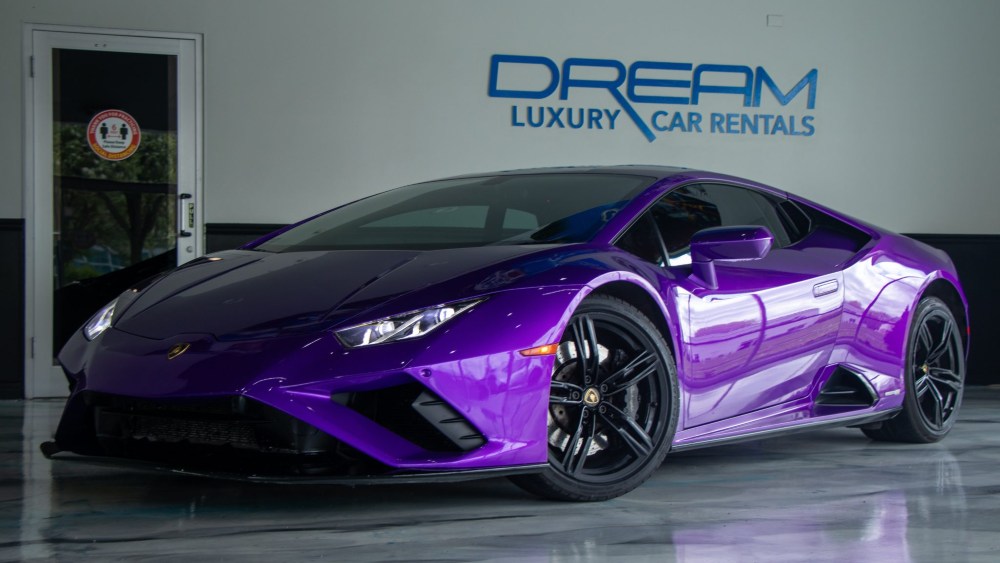
Lamborghini’s 2026 range covers three platforms, all electrified. The Revuelto leads as the V12 plug-in hybrid flagship, the Temerario debuts as the V8 hybrid successor to the Huracán, and the Urus SE continues as the brand’s plug-in hybrid super-SUV.
Lamborghini Revuelto
The V12 plug-in hybrid flagship and Lamborghini’s first HPEV (High Performance Electrified Vehicle). A naturally aspirated 6.5L V12 pairs with three electric motors and a dual-clutch e-gearbox. The Revuelto is the only naturally aspirated Lamborghini in the current range.
Technical specifications:
0-100 km/h: 2.5 sec
0-200 km/h: <7.0 sec
Maximum velocity: >350 km/h (>218 mph)
Total engine displacement: 6498 cm³
Engine type: V12 naturally aspirated + 3 electric motors (PHEV)
Maximum power output: 1015 CV combined (825 CV engine + electric)
Lamborghini Temerario
Lamborghini’s first V8 mid-engine sports car since the 1981 Jalpa, and the successor to the Huracán. A new flat-plane twin-turbo V8 pairs with three electric motors and is engineered to rev past 10,000 rpm — a first for a production Lamborghini.
Technical specifications:
0-100 km/h: 2.7 sec
0-200 km/h: <7.3 sec
Maximum velocity: 343 km/h (213 mph)
Total engine displacement: 3995 cm³
Engine type: V8 twin-turbo flat-plane + 3 electric motors (PHEV)
Maximum power output: 920 CV combined (800 CV engine + electric)
Maximum engine speed: 10,250 RPM
Lamborghini Urus SE
Lamborghini’s plug-in hybrid super-SUV and the brand’s first PHEV in the segment. Combines a twin-turbo V8 with a permanent magnet synchronous electric motor and a 25.9 kWh battery, delivering all-electric driving capability alongside Lamborghini super-SUV performance.
Technical specifications:
0-100 km/h: 3.4 sec
0-200 km/h: 11.2 sec
Maximum velocity: 312 km/h (194 mph)
Total engine displacement: 3996 cm³
Engine type: V8 twin-turbo + 1 electric motor (PHEV)
Maximum power output: 800 CV combined
Electric-only range: >60 km
Lamborghini Fenomeno
Beyond the standard range, Lamborghini also produces the Fenomeno, a Few-Off limited series of just 29 units (plus 15 Roadster examples) with the most powerful V12 ever built by the brand.
Coupe unveiled: August 16, 2025 at Monterey Car Week
Roadster unveiled: May 10, 2026, limited to 15 units
Built on: Revuelto platform
Engine: 6.5L naturally aspirated V12 + 3 electric motors (PHEV)
Combined output: 1,080 CV (1,065 hp)
0-100 km/h: 2.4 sec
Top speed: >350 km/h (>217 mph)
Marks: 20th anniversary of Lamborghini Centro Stile
Bridging the Two Brands
Lamborghini holds the V12 advantage. The Revuelto is the only car between the two brands offering a naturally aspirated V12 in a flagship plug-in hybrid configuration.
Ferrari counters with the 849 Testarossa, whose combined V8 PHEV output of 1,050 CV edges past the Revuelto on paper, while the Amalfi serves drivers who want a refined front-engine grand tourer rather than a mid-engine sports car.
For everyday usability across passengers and luggage, the Lamborghini Urus SE remains the most practical option on either side of the comparison.
| READ MORE: Complete Guide to Renting an Exotic Car in Miami 2026 | DRMLXRY
Renting a Luxury Car? How to Choose Between Ferrari and Lamborghini
Step 1: Define the Occasion
A long weekend drive on open road favors Ferrari’s grand-tourer balance, especially the Roma or 12Cilindri. A nightlife arrival, a major event entrance, or a photo shoot favors Lamborghini’s visual presence and louder exhaust note.
Step 2: Decide What You Want the Car to Sound Like
A naturally aspirated V12, available in the Revuelto, Purosangue, and 12Cilindri, delivers the loud, high-revving soundtrack most associated with classic supercars. Turbocharged and hybrid V6 or V8 powertrains, found in the 296 GTB, SF90, and Temerario, are quieter and more controlled, with sharper low-end torque delivery.
Step 3: Count Passengers and Luggage
Two-seat supercars (296 GTB, SF90, Temerario) fit two adults and minimal cargo. Four-seat options exist on both sides: the Ferrari Purosangue and the Lamborghini Urus. The Urus has been on the market longer and is the more familiar choice for groups, luggage, and family trips.
Step 4: Match the Driving Feel to Your Preference
Ferraris feel sharper, lighter, and more clinical. Lamborghinis feel heavier, louder, and more theatrical. Both deliver elite performance. The difference is character, not capability.
Step 5: Factor in Availability and Timing
Both brands produce limited annual volumes. According to Ferrari’s 2024 annual report, the company shipped roughly 13,750 vehicles globally that year. Lamborghini reported similar figures, with the Urus accounting for a large share of total deliveries. Flexibility on model and color expands options considerably, whether buying or renting.
Frequently Asked Questions
Is Ferrari or Lamborghini faster?
Within current flagships, the Ferrari SF90 Stradale and the Lamborghini Revuelto both reach 60 mph in roughly 2.5 seconds. Top speed favors the Revuelto at approximately 218 mph versus 211 mph for the SF90, according to manufacturer specifications. The new Lamborghini Temerario also outpaces the Ferrari 296 GTB on paper.
Which is more expensive, Ferrari or Lamborghini?
Pricing depends heavily on model and options. Ferrari’s SF90 and 12Cilindri start above $500,000 before options. Lamborghini’s Revuelto starts above $600,000. Entry-tier models such as the Ferrari Roma and the new Lamborghini Temerario start lower, but options and customization can push final prices well beyond MSRP on both sides.
Is a Ferrari or Lamborghini better for first-time supercar drivers?
The Lamborghini Urus is the most approachable option for first-time supercar drivers, with SUV-style ergonomics, four seats, and all-wheel drive. The Ferrari Roma is the most forgiving Ferrari for newcomers, with a front-engine layout and grand-tourer tuning. Both deliver supercar performance without the sharper edge of a mid-engine flagship.
Which holds its value better, Ferrari or Lamborghini?
Limited-production models from both brands often hold value well. Ferrari has historically commanded strong resale on production-limited variants, according to data from auction houses such as RM Sotheby’s and Gooding & Company. Actual values vary by model, mileage, condition, and option specification.
Which is more rare on the road?
Both brands produce limited global volumes. Ferrari delivered approximately 13,750 vehicles globally in 2024 per its annual report, with similar figures from Lamborghini. Neither is common on US roads, and both retain strong exclusivity in 2026.
Drive Both Before You Decide
The Ferrari vs Lamborghini comparison does not have a single winner. Ferrari rewards drivers who want a precise, motorsport-derived experience. Lamborghini rewards drivers who want theater, drama, and a louder soundtrack. The best way to settle the debate is to drive both, ideally on similar routes, and feel the difference firsthand.
DRMLXRY operates a Ferrari and Lamborghini fleet across Miami and Detroit, with white-glove delivery to airports, hotels, and residences in both markets. To check current availability or build a back-to-back driving experience across both brands, call DRMLXRY today!
This content is for informational purposes only. Vehicle availability, pricing, insurance requirements, and rental policies are subject to change and may vary by location and season. For current terms and personalized booking assistance, contact DRMLXRY in Detroit at (313) 447-1684 or Miami at (786) 999-8288, or visit drmlxry.com